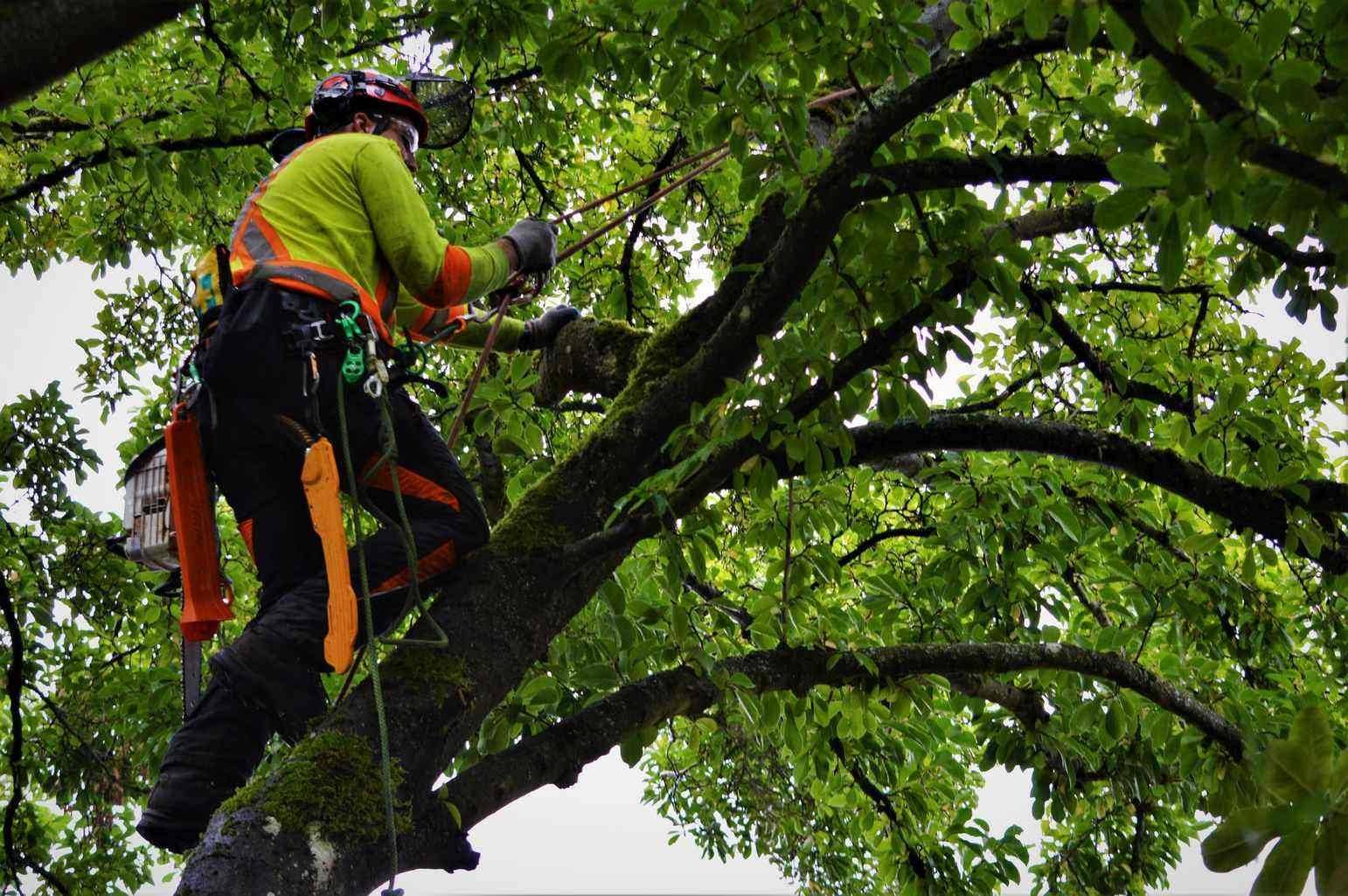
When it comes to maintaining a healthy and visually appealing yard, few things have as significant an impact as proper tree care. In cities like Burlington, where vegetation is an essential part of both the urban and residential landscape, having a reliable burlington tree service can make the difference between an outdoor space that looks spectacular year-round and one that deteriorates with each passing season. Trees are not mere decorative elements; they are living organisms that require specialized attention, and understanding why professional care matters so much will help you make much smarter decisions as a property owner.
Many people assume that trees, being part of nature, simply take care of themselves. And to some extent that is true when we talk about forests and wild spaces where the ecosystem self-regulates. However, in an urban or suburban environment the story changes completely. Trees planted in residential gardens, along streets, or on commercial properties face very different conditions from what they would encounter in their natural habitat. The soil may be compacted, roots compete with pipes and foundations, sun and wind exposure varies depending on surrounding construction, and often the species chosen are not the most suitable for the local climate. All of this creates situations where the intervention of a certified professional is not a luxury, but a real necessity.
Why preventive maintenance is the best investment
The concept of preventive maintenance applies perfectly to tree care. Just as you take your car to the shop for regular checkups before something breaks down, trees also benefit enormously from routine inspections and treatments. A professional arborist can detect early signs of disease, pest infestations, or structural problems that, if left unaddressed, could turn into costly or even dangerous situations. Imagine a large branch that has developed an internal weakness due to a fungal infection; to the naked eye it may look perfectly healthy, but during a strong storm it could break off and cause significant damage to your property, to a vehicle parked underneath, or worse, to a person.
Regular maintenance includes activities such as structural pruning, which is performed on young trees to guide their growth and ensure a strong framework as they mature. There is also sanitation pruning, focused on removing dead, diseased, or damaged branches that could spread to the rest of the tree. And we cannot forget reduction pruning, which helps keep the size of the tree within manageable limits without compromising its health. Each type of pruning has its ideal time of year and its specific technique, and performing them incorrectly can cause more harm than good. That is why, even though it may be tempting to grab a saw and do it yourself on a weekend, the reality is that the technical knowledge a professional brings is worth every penny.
How to choose the right professional for your tree care needs
Choosing a tree service should not be a decision taken lightly. Not everyone who offers this type of work has the same training, experience, or quality standards. The first thing you should verify is whether the company holds recognized certifications in arboriculture. Certified arborists have demonstrated a level of knowledge that goes far beyond simply knowing how to operate a chainsaw. They understand tree biology, are familiar with industry best practices, and stay up to date with local regulations that may affect work on your property.
Another fundamental factor is liability insurance. Tree work is inherently risky, and if something goes wrong during a pruning or removal operation, you want to be absolutely certain that you will not be the one bearing the costs. A reputable company will always be able to show you their current insurance policy without any hesitation. If someone is evasive about this question, that should be a fairly clear warning sign. Additionally, it is worth asking about the team’s specific experience with the tree species on your property, since each species has its own particularities and what works for an oak may not be the best approach for a maple or a cedar.
Signs that your trees need urgent professional attention
Sometimes trees give us fairly clear signals that something is wrong, but you need to know how to interpret them. If you notice that a tree’s leaves change color out of season, fall prematurely, or display unusual spots, it could be a disease or pest that requires immediate treatment. Similarly, if you observe fungi growing at the base of the trunk or along exposed roots, that generally indicates internal decay, which can seriously compromise the stability of the tree.
Vertical cracks in the trunk, bark peeling off in large sections, or a progressive lean are all signs of structural problems that should not be ignored. A tree that begins to lean may have a compromised root system, and although the lean may seem slow and apparently harmless, it could end in a sudden collapse. Also pay attention to branches that cross each other or constantly rub together, as those friction zones create open wounds that serve as entry points for pathogens. In any of these situations, contacting a professional is the most sensible and responsible decision.
The impact of tree care on your property value
Something that many property owners do not consider is the direct impact that well-maintained trees have on the market value of their property. Studies conducted across North America have consistently shown that homes with mature, healthy trees can be worth between five and twenty percent more than similar properties without significant vegetation. This makes perfect sense when you think about it: a yard with lush, well-maintained trees conveys an image of care, stability, and quality of life that is enormously attractive to potential buyers.
But the economic benefit is not limited to resale value. Strategically located trees provide natural shade that can significantly reduce air conditioning costs during the summer. In winter, evergreen trees act as windbreaks that decrease heat loss from your home. We are talking about real, measurable savings on your energy bill, month after month, year after year. Of course, for a tree to fulfill these functions effectively, it needs to be healthy and properly pruned, which brings us back to the importance of having a reliable professional service.
Most requested services and what each one involves
Within the range of services offered by a professional tree care team, pruning is undoubtedly the most requested. But as we mentioned earlier, there are different types and each one serves a specific purpose. Crown thinning, for example, seeks to reduce the density of the canopy to allow greater light penetration and air circulation, which benefits both the tree and the lawn and plants growing beneath it. Crown raising involves removing the lowest branches to increase clearance beneath the tree, something especially useful in areas with pedestrian or vehicular traffic.
Tree removal is another essential service, although ideally it is only resorted to when there is no other viable option. A tree may need to be removed because it is dead, because it poses an imminent danger to nearby structures, because its roots are damaging foundations or pipes, or simply because it has outgrown the available space. Removal is a complex process that requires careful planning, specialized equipment, and in many cases, municipal permits. Attempting to do it without proper training is extremely dangerous and can result in serious property damage or personal injury.
Stump treatment after removal is a complementary service that is often overlooked. Leaving a stump untreated is not only unsightly, but it can become a breeding ground for pests and diseases that affect other nearby trees and plants. The stump grinding process removes the residue to several inches below ground level, allowing the area to blend back into the landscape naturally and without sanitary risks.
The importance of respecting local regulations
In many jurisdictions, including Burlington, there are specific regulations about what can and cannot be done with trees on private and public properties. Some trees may be protected by local ordinances due to their species, size, or location, and removing them without the corresponding permit can result in substantial fines. A serious professional service knows these regulations in detail and can advise you on the necessary legal steps before carrying out any significant work.
These regulations exist for good reasons. Urban trees provide environmental benefits that go far beyond the individual property where they are planted. They purify the air, absorb rainwater reducing the risk of flooding, provide habitat for local wildlife, and help mitigate the urban heat island effect. When a property owner removes a mature tree, those community benefits are lost, and that is why local authorities seek a balance between the rights of the property owner and collective well-being.
Current trends in professional tree care
The tree care industry has evolved enormously over the past few decades. Today, the most advanced professionals use cutting-edge technology to assess the internal health of trees without the need for invasive cuts. Devices such as sonic tomographs and resistographs allow for a detailed image of the trunk’s interior, identifying areas of decay or structural weakness that would be impossible to detect with the naked eye. This advanced diagnostic capability allows for much more informed and precise decisions about the appropriate treatment.
There is also a growing trend toward more sustainable and environmentally respectful care practices. This includes the use of biological treatments instead of chemicals for pest control, the implementation of composting techniques with pruning debris, and an overall approach that prioritizes tree conservation whenever possible. Clients are increasingly well-informed and value companies that demonstrate a genuine commitment to environmental sustainability, which is driving a positive transformation across the entire industry.
Ultimately, professional tree care is an investment that pays for itself in multiple ways. It protects your property, increases its value, improves your quality of life, and contributes to the well-being of the entire community. Whether you need a simple maintenance pruning or are facing a more complex situation such as the removal of a problematic tree, taking the time to choose the right professional and maintain a regular care program is one of the smartest decisions you can make as a property owner. Your trees are a long-term investment, and like any good investment, they deserve the attention and care of those who truly know what they are doing.